About
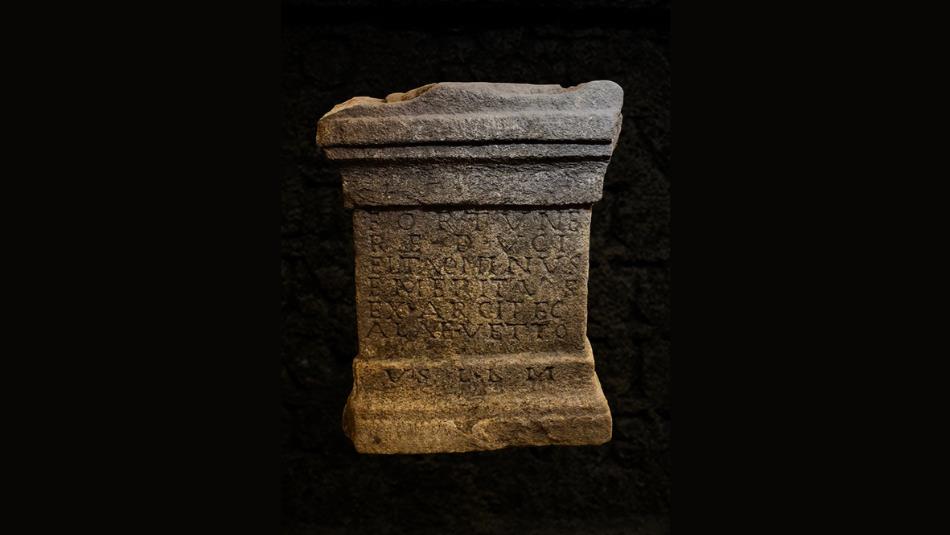
Discover an 1,750 year old Roman altar in Gallery 1 at the Faith Museum. Dedicated around AD 275 to Fortuna Redux, goddess of safe homecomings, by a retired military architect from Binchester Roman Fort, this artifact offers a captivating glimpse into ancient faith, hope, and gratitude.
Located in Gallery 1 of the Faith Museum, a newly displayed Roman altar from nearby Binchester Roman Fort offers a captivating window into life 1,750 years ago. When Binchester’s Roman Bathhouse was explored, a pile of discarded items shed light on an extraordinary past. Alongside well-known discoveries like the Binchester Ring—one of the country’s earliest Christian relics—visitors to the Faith Museum can now view another once-abandoned piece of history.
Around AD 275, a worshipper of the Pagan Roman gods set up this altar in the changing room of the town bathhouse at Binchester. It was dedicated to the Roman goddess Fortuna Redux by a man named Eltaominus. An inscription reveals he was a retired military architect from the Ala Vettonum unit based at Binchester.
Dedications to Fortuna Redux (Fortuna the Home-Bringer) were often made after returning safely from a dangerous journey, indicating Eltaominus believed the goddess had protected him and that Binchester was his home. Offerings of wine, spices, grain, or meat were poured into the hollow at the top of the altar. To display his devotion, Eltaominus had the altar incorporated directly into a rebuilding of the bathhouse.
It occupied a specially designed niche with a decorative paint scheme in the corner of the changing room, where bathers could view both the inscription and the carving of a bull on the adjacent side.
While the details of Eltaominus’ worship may seem distant today, the relief of returning home after a challenging journey and the public celebration of a safe homecoming highlight a universal human experience that spans eighteen centuries.
.png )





 Find out what’s happening this week across the Culture County. From festivals and exhibitions, to sport and theatre, you’re certain to have an eventful time in Durham.